
A Bad Economy Getting Worse
As the economy gets tougher for average Americans, anti-corporatism and anti-capitalism sentiment is growing rapidly, as evidenced by this short article showing dramatic changes in the public’s attitude from 2019 to 2022. The wealthy are getting richer off the backs of the rest of us. 
A recent Gallup poll shows only 54% of all Americans view capitalism positively, down from 60% in just four years. Among Democrats, only 42% view capitalism favorably, while 66% have a positive view of socialism. Most pundits credit this dramatic shift in public opinion to the rapidly growing trends in wealth and income inequality, especially since Ronald Reagan’s presidency.
This GovFacts article points out “From the liberal and progressive viewpoint, high and rising economic inequality is not a benign or natural outcome of a healthy economy. It’s viewed as a systemic failure that poses a grave threat to economic stability, social cohesion, and democracy itself.” That has led to the rise of progressive politics, with various groups calling for major changes to how society is organized.
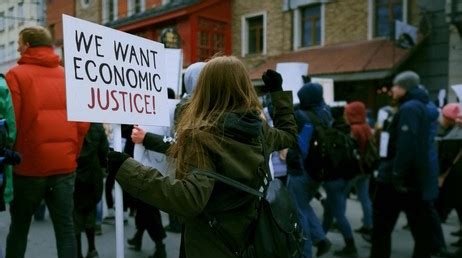 It also states “Socialists offer a fundamental critique of capitalism itself, arguing that extreme economic inequality is not a bug but an inherent and inevitable feature of the system. The core problem, in this view, is not the unequal distribution of income, but the private ownership of the means of production – the factories, land, and technology used to create wealth. This creates a fundamental power imbalance between the capitalist class (owners who profit from ownership) and the working class (who must sell their labor to survive).”
One group is explicitly calling for the replacement of capitalism with socialism, the Democratic Socialists of America (DSA). Their website states “Capitalism is a system designed by the owning class to exploit the rest of us for their own profit. We must replace it with democratic socialism, a system where ordinary people have a real voice in our workplaces, neighborhoods, and society.”
The Game Is Rigged
The problem with DSA is that they are trying to change capitalism from within – that is, they are playing on their opponent’s “home field” where the rules of the game are rigged in favor of their opponent. Capitalism is based on money – who issues it and who controls it. 
With respect to the US dollar (and all other national currencies) the “who” is the 1%. The institutions of capitalism are well known, which provides the answer to who controls money. That is bad enough, but what most people don’t realize is that the 1% are also the ones who “create” the money supply (i.e., they issue it).
The wealthy currently control our money supply and distribution. This global financial ecosystem was designed several hundred years ago, by the rich, for the benefit of the rich. Most people are not aware that almost all the money in circulation does not come from the government, but from private banks that are owned by guess who – the wealthy (1%).
 Those banks are granted a charter from the government to create new money with every loan they issue. (They don’t lend depositor’s money, the common misconception.) Thus, our government, along with all the other national governments, have privatized the creation of our national currencies. The Bank of England confirmed this in 2014 with a video and several articles.
But that is not all. When the banks create money out of thin air, they only create the principal with each loan, but not the interest. That interest gets pulled out of the existing money supply. Thus, the wealthy designed a system that, with each loan, takes a portion of the wealth from the rest of us and gives it to themselves. That is why the rich are getting richer and the rest of us are getting poorer. And that is also why governments throughout the world fail to ever permanently fix the problems that beset the rest of us, as they too borrow from the wealthy to pay for government programs. And then we pay for that borrowing with our taxes! The system is absolutely rigged to favor the wealthy.
That Means We Are Powerless To Do Anything About It. Right?
Wrong. The reality is that we are not helpless! We can address our own needs, regardless of what the rich and powerful do. The only thing standing in our way is the lack of knowledge on how we can do that – and the will to act on it. As Mayor Mamdani said in his inauguration speech, “we hold the levers of change.” But what kind of change can we bring about? We start by recognizing that it doesn’t make sense to use the same mechanisms that produced the problems and expect a different outcome. We need think outside the box.
For inspiration on how we the people can produce major change that benefits the “rest of us,” we can turn to the Futurist Buckminster Fuller 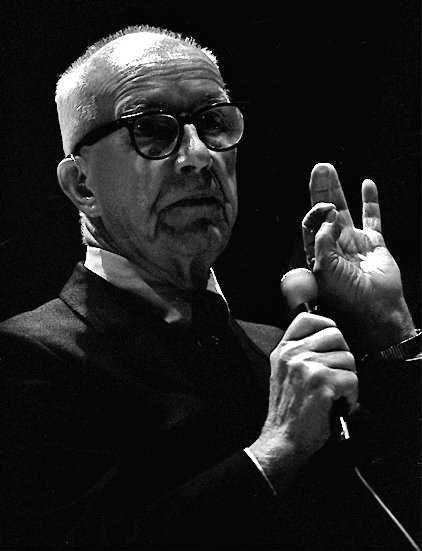 who famously stated “You never change things by fighting the existing reality. To change something, build a new model that makes the existing model obsolete.” Thus, we need to develop something that does not start inside the current financial ecosystem. And as human beings, we can only create something that we can envision.
How can we accomplish that? How can we produce an economy that works for the rest of us, not just the wealthy? In the hopes of finding a solution, we decided to look to history for examples of times and places where the people actually lifted up their local economy by working outside the existing financial paradigm and without relying on the government or the wealthy to do it for them.
Successful Models From The Past
For the folks at DSA, it would be helpful to realize that a group of US citizens in North Dakota have already built a number of socialist programs that seized the power to create money from the capitalists and in the process created the most prosperous state in the union today. The story goes back to the early 1900s when North Dakota farmers and merchants were facing the kind of economy facing the rest of country today. Many were on the edge of bankruptcy, all due to the financial conditions imposed by the corporate and political interests from Minneapolis and Chicago. 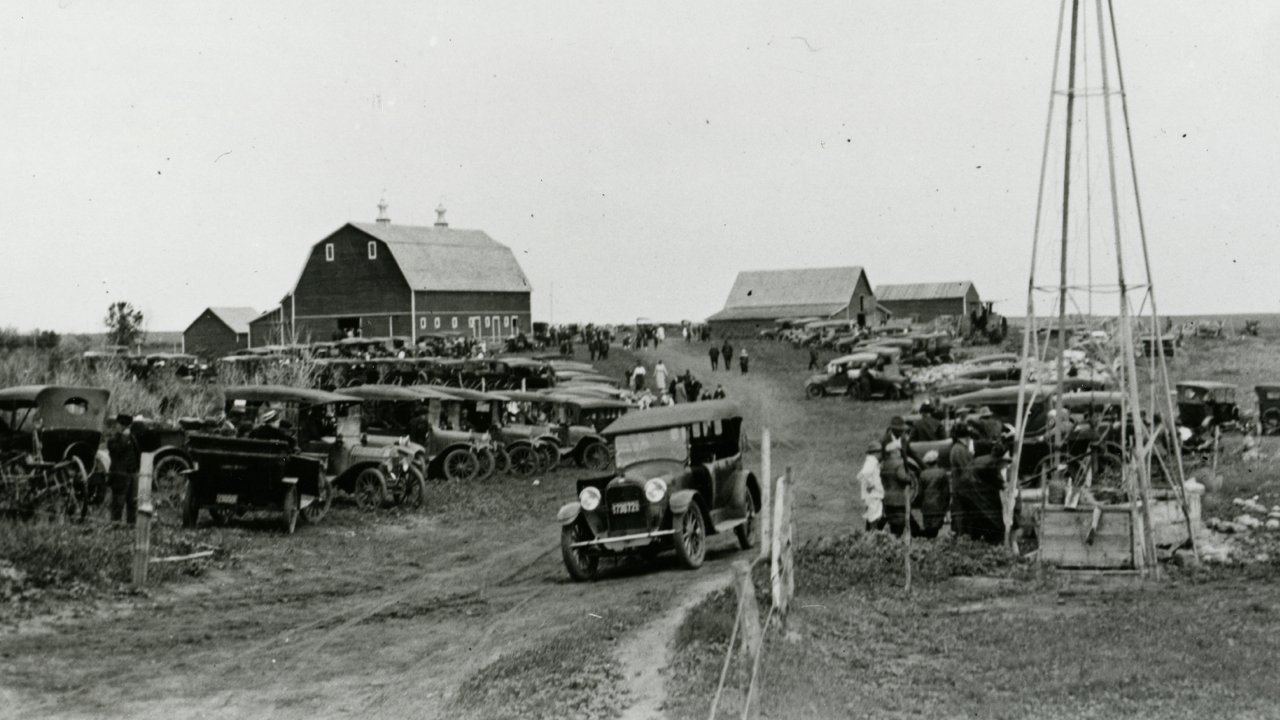
A large number of those farmers and merchants got together and formed the Nonpartisan League (NPL), based on the inspiration of Arthur C. Townley, a former organizer for the Socialist Party of America. On behalf of small farmers and merchants, the Nonpartisan League advocated state control of mills, grain elevators, banks, and other farm-related industries. (see the story of The Birth of the Nonpartisan League) The NPL succeeded in kicking out the state government and passing major legislation that created a bank owned by the state of North Dakota (the Bank of North Dakota – “BND”), along with ND Mill and Elevator.
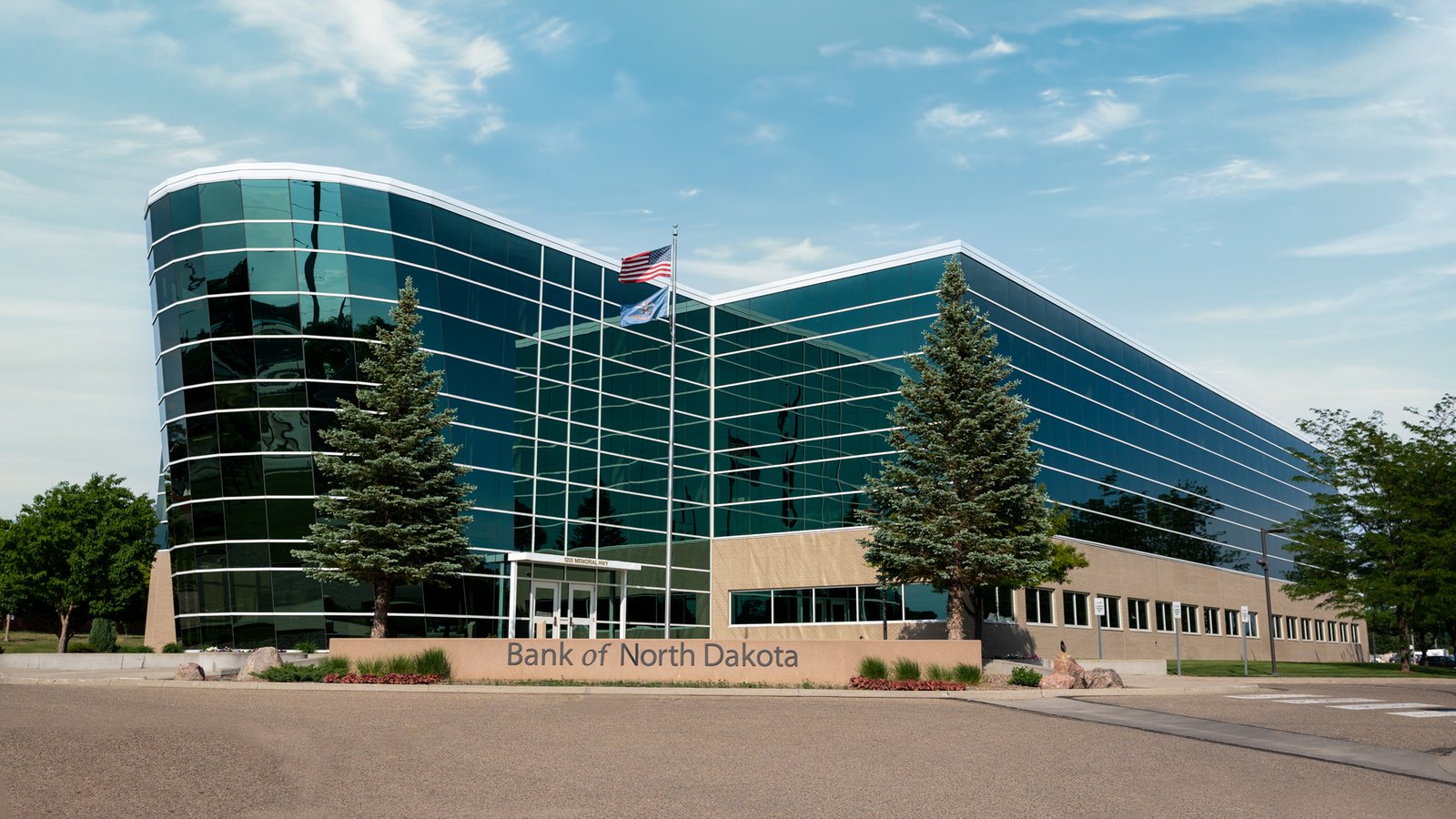 With the creation of BND and the mill, the Grand Forks Herald wrote:
“The session was the most important in the history of the state, and it accomplished the most far reaching legislation yet enacted. The state is now the socialistic laboratory of the country, and unless the people veto the administration measures the experiment soon will begin… The most interesting experiment in the history of the country will be carried out in this state during the next two years.” The Herald concluded, “There is nothing Bolshevist, so far….”
And while the NPL was soon replaced by the Republican Party, the Republicans wisely kept in place those “socialist” creations and as a consequence, more than 100 years later, North Dakota’s economy is the strongest and healthiest in the country. The primary revenue source for the state is BND. And it has the healthiest community banks in the country and much more. The lesson for DSA and the rest of us is that citizens can seize control of the money system and have it serve society and not just the wealthy.
Are There More Success Stories From The Past?
Yes, we succeeded in finding other examples where citizens established their own financial ecosystems and produced very prosperous communities. The key difference of these other examples is that they succeeded by issuing their own money and not the national currency.
See those historical examples here, including the town of Wörgl (pictured) .
And while the example of BND is appealing (commonly called a public bank), there have been numerous failed state and local efforts to replicate BND around the country (see the Public Banking Institute), every one of which has been blocked by the for profit banking industry, fearing competition.
Fortunately money is not a fixed and static thing. Money is a consensus concept. That is, anything can be used as money to carry on commerce in society, as long as a sufficiently large enough group of people all agree that they will treat somethings as money. That is what this website is all about. It describes how we the people can take control of our own financial destiny and change our future for the better, based on successful models from the past, where the people issued their own money. It comes down to understanding the reality of money – who issues it and who controls it, and what the alternative to the current system might be.
And most importantly, the current financial ecosystem continues to exist because we have been living with it for so long that we do not realize that it is not immutable and that we can choose another path. The first step is to make a decision that if the wealthy are allowed to create money in a system that only benefits them, then we the people should likewise be allowed to create money in a system that benefits all of us. And given the choice, who would choose the system that only benefits the rich? That idea is played out in a short story we wrote titled The Parable of Anytown USA. Also see this section (and the below video) on how money is currently issued and controlled today, and then the alternative paradigm that we can control.
Complementary Currencies
To apply that knowledge to creating an economy that serves the many and not the few, we need to escape the stranglehold of the current system. We do that by taking back the power to issue our own money – the “people’s money” as it were. This kind of money goes by various names, most commonly it is called a “complementary currency.” 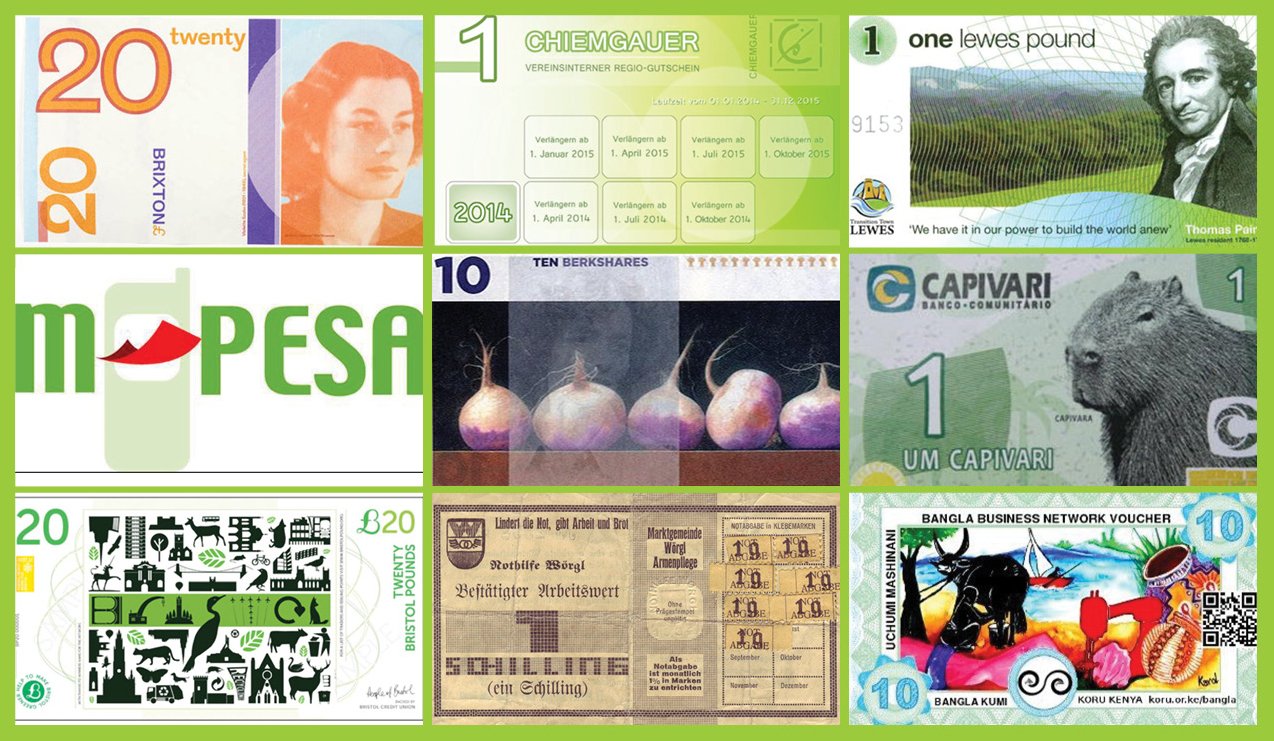
This is not as far-etched as one might assume. In reality, the idea of the people issuing their own money is not a new one. In fact, as this article from the Federal Reserve points out “The government isn’t the only entity allowed to issue money. Private citizens and businesses can too, and throughout U.S. history, they often have.”
It is already happening. Every time you hear about a new cryptocurrency offering (one form of a complementary currency), you see another example of money being issued by private parties. But cryptocurrencies are mostly a plaything of the wealthy. In contrast, thousands of communities have issued and are still issuing their own “local currencies” (not cryptocurrencies) to lift up their local economies.
Historically, most of them have tended to produce only a marginal benefit to their community. But some have produced success far beyond what most of us could hope for. We discovered these successful examples from the past, and they provide us with the model for building a modern version that can truly bootstrap local economies everywhere, including New York City.
Thus, if we did issue our own currency, Mayor Mamdani would have all the money he needs to implement his programs and then some, without having to depend on Albany, the Governor, or the federal government. See this page that explores how the Mayor and New York City can use this system to quickly address all the promises he made while running for the election and much more.
Our organization, the Sustainable Communities Foundation (SCF), has built an entire financial ecosystem around this concept. Michael Sauvante, the founder of SCF, is the chief architect of this new ecosystem, including a complementary currency bank, an online marketplace and an information portal for learning about the system and enrolling in it. Take this visual Guided Tour to see how all the parts fit together.
In addition, Sauvante has written a comprehensive “free” eBook detailing the elements that go into such a system, what can be done with it today and what more could be done with a small change in the US tax code. The book is titled “Money – It’s Not What You Think It Is.”