
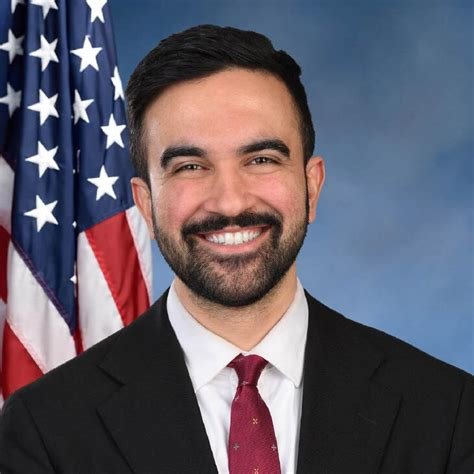
 Zohran Mamdani campaigned on affordability, a concept that has come to dominate the national conversation.
More significantly, he is a member of the Democratic Socialists of America (DSA), along with Alexandria Ocasio-Cortez (AOC) the Congresswoman from NY-14. In addition, come November, it is a near certainty that there will be three more members of Congress from NYC that are also Democratic Socialists – Brad Lander (NY-10), Claire Valdez (NY-07) and Darializa Avila Chevalier (NY-13). That means 4 out of 10 (40%) of the members of Congress from New York City are also members of DSA. That should be a huge clarion call for the nation concerning the rise of progressives in elected office, and in particular those who are members of the DSA. 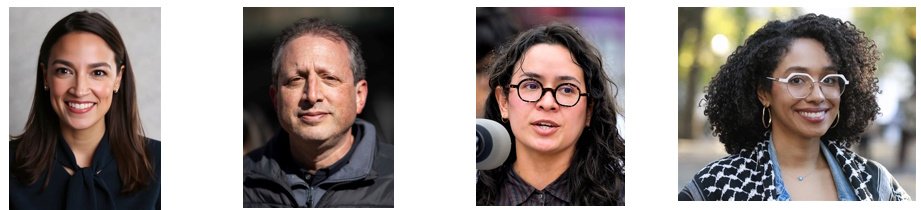
Given such a large percentage of politicians representing New York City, the largest city in the United States, NYC is an ideal candidate to demonstrate how Democratic Socialism can replace Capitalism, the primary goal of DSA as defined on their website. This page is dedicated to showing how NYC can embrace the goals and means of DSA to bring about “a system where ordinary people have a real voice in our workplaces, neighborhoods, and society.”
We start with the main campaign promises that Zohran Mamdani made and how he proposed to address them under the current capitalist financial ecosystem, an uphill battle at best. We then point out how switching over to tools that DSA has in its power to deploy, as presented here, to dramatically and rapidly achieve all those campaign goals and much more.
Mayor Mamdani’s Campaign Promises
He spelled out several goals to address affordability problems in NYC, and has proposed raising taxes on the rich to pay for them.
- Transportation – free bus service in NY City.
- Housing – a rent freeze rent for nearly 1 million New Yorkers and building 200,000 new homes over the next decade.
- Child Care – free child care for children between six weeks and five years old.
- Food – a city-owned grocery store in each borough.

However, the mayor and city council can only freeze the rent. The other goals will likely require support from the state legislature and the governor, who has expressed opposition to raising taxes. The legislature would need to pass a bill to raise billions of dollars in taxes on the wealthy to pay for those programs. And therein lies a huge problem.
The Mayor has succeeded in getting Governor Hochul to partially address goal #3 by agreeing to a program that will soon provide NYC parents access to free child care for their 2-year-olds. While major progress, that still leaves out a complete solution for children between the ages of 3 and 5. It also leaves unaddressed the other three campaign promises. Those will likely be very difficult to fund under the current financial ecosystem.
Nearly every state and federal legislative body is predominantly controlled by politicians who have been elected thanks to significant campaign funding by the wealthy. And a large percentage of those wealthy people fight like hell to avoid paying taxes, even their fair share. And the latest efforts in Congress dictated by the wealthy (see the Big Beautiful Bill) shows that they are even willing to directly take from the rest of us so that they can pay even less tax.
So, although programs like those proposed by Mamdani would benefit millions, getting money out of the wealthy today makes Scrooge look downright generous.
The reality is that we are not helpless! We can address our own needs, regardless of what the rich and powerful do. The only thing standing in our way is the lack of knowledge on how we can do that – and the will to act on it.
In his inauguration speech, Mamdani noted that “A moment like this comes rarely. Seldom do we hold such an opportunity to transform and reinvent. Rarer still is it the people themselves whose hands are the ones upon the levers of change.”
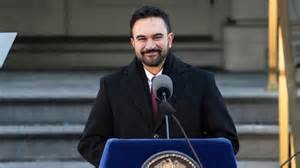
As he said, we hold the levers of change. But what kind of change can we bring about? We start by recognizing that it doesn’t make sense to use the same mechanisms that produced the problems and expect a different outcome. We need think outside the box, as we detailed on the home page.
How Can We The People Fund Those Programs Ourselves?
We the people are capable of, and legally allowed to, issue our own money which we can use to aggressively address all manner of social, environmental and economic problems, including those that Mayor Mamdani identified. We have spelled out what kind of financial ecosystem is needed and then suggest organizations like DSA can either build their own ecosystem or partner with Sustainable Communities Foundation (SCFndn) and use our ready-made system that can be deployed immediately (at no cost to DSA). Let’s assume that DSA elects to partner with us. Here is what we can immediately do to address the goals defined by the Mayor, and much more. In addition to DSA, the City of New York also needs to agree to accept the “Liberty” complementary currency issued by SC Foundation to citizens in the state of New York.
To save time, we are going to first encourage you to download this book Money – It’s Not What You Think It Is, which can be downloaded from this link. We will occasionally refer to specific chapters in the book that go into greater depth about the topic in question. The table of contents in clickable to take you directly to a particular chapter. Let’s take each of Mayor Mamdani’s goals and discuss what can be done with them.
Goal #1 Transportation – Free bus service (and other public transit) in NY City (see Chapter 19)
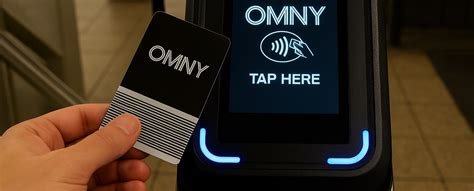 Currently one can use the OMNY card to “tap and ride” anywhere in NYC on buses, trains and ferries. Rather than making all public transit free, the city need only provide free passes to those who request them. That would require a new online transportation token system that ties into the existing one, which can be accomplished with approximately one month’s time. The OMNY card can be replenished in numerous kiosks and participating Walgreens, CVS, 7-Eleven, and CFSC Checks Cashed stores, as well as many bodegas and independent pharmacies. OMNY cards can also be reloaded online by linking it to a free and secure OMNY account. SC Foundation can set up another online portal that operates just like the current systems with the exception that we will also offer riders the additional option to receive free tokens on their OMNY card instead of purchasing them. When they do so, SC Foundation will directly pay the City of New York the requisite fees in the form of the Liberty complementary currency (the currency for the state of New York) and the process is transparent to the user. Thus, no changes need to be made to the current OMNY cards and the system that uses them. The key here is that the city just needs to agree to be paid in Liberties.
Goal #2 Housing – A rent freeze rent for nearly 1 million New Yorkers and building 200,000 new homes over the next decade. (see Chapter 26)
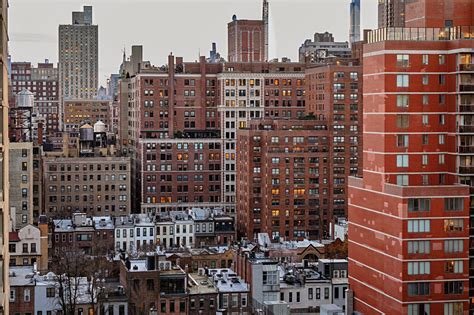 The rent freeze can be addressed directly by the Mayor and the City Council. Not so the building of new homes. However, with SC Foundation complementary currencies, many new residential properties can be paid for, as well as ones that result from converting numerous forms of commercial properties fully detailed in Chapter 26, which can bring viable properties online much faster than building new ones.
There is also another solution to housing that has to do with slumlord properties. Such properties often result in a variety of problems for communities and local governments that often struggle to deal with them. Chapter 28 deals with blight remediation (another benefit our system can provide the city not already articulated by the Mayor) and has a section titled “A Special Case” that explains how we can use a combination of eminent domain (described just before that special case section and below) and our complementary currency to force slumlords to either clean up their act or be forced to sell their properties to the city or a public interest entity that would hold them for the benefit of the commons. Getting rid of 100% of slumlord properties and turning them into public domain entities for the benefit of the tenants, the city and the community in general is a realistic goal that can easily be accomplished if the city, DSA and SC Foundation cooperate with this goal in mind.
Goal #3 Child Care – Free child care for children between six weeks and five years old
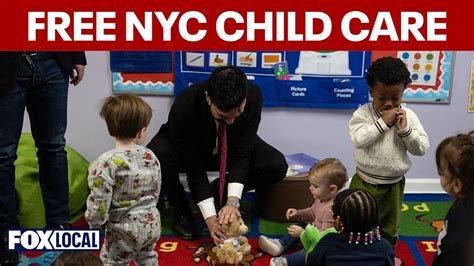 By issuing outright grants of our complementary currency for child care facilities and employees, the Mayor and the citizens of NYC can receive universal free child care for all children up to five years of age or even older if deemed needed.
Goal #4 Food – A city-owned grocery store in each borough (see Chapter 18 for a full program dealing with food insecurity and Chapter 27 on how to nurture local food production, rural, suburban and even urban)
We consider food and food production/delivery systems to be one of the most important programs we can possibly support with a complementary currency financial ecosystem. Everyone needs to eat and we consider food a basic human right. Of the UN’s 17 Sustainable Development Goals, food insecurity is ranked #2. (SDG#2) “End hunger, achieve food security and improved nutrition and promote sustainable agriculture.” We agree. We approach this issue as a systemic one, where we need to address the issue from farm to table. Therefore, we view city-owned grocery stores as a solution to only part of the problem.
We start with idea that nobody should go without adequate nutrition to survive on an open ended basis. Every person needs as least two full meals a day with adequate nutritional elements to provide them with all they need to survive. If they have that and clean water, adequate shelter and don’t get injured or sick, they have the minimum they need to exist. With that in mind, we start with a universal basic food grant (BFG) to anyone wishing to receive it. We don’t propose a “means test”. A BFG is a form of universal basic income (UBI) in that anybody can receive it. We propose to provide every man, woman and child that enrolls in the program with a periodic BFG in the form of a certain amount of (unrestricted) complementary currency deposited into their complementary currency checking account with which they can purchase food. By unrestricted we mean that they can spend it on food or anything else, and if used for something other than food, that then frees up dollars in their budget to purchase food with those dollars.

With the BFG, we allow everybody to “buy” food. But that is just the beginning of this “food chain”. Next we need to be able to produce the food (locally), which can be done just about anywhere – rural, suburban and even urban farming. Locally produced food would be more nutritionally beneficial than preservative-laden food shipped in (see Chapter 27). We would provide grants to establish those food production systems (including rescuing small farmers facing extinction) along with grants to pay for labor as needed. The city-owned grocery stores just represent a major distribution system for the food grown in these production systems. We can provide grants to both establish those stores and to provide them with the workforce to operate them. Such stores, along with the farms and other food productions entities all need to accept the alternative currency, to nurture the whole ecosystem.
Bad Actor Corporations (see Chapters 29 – 31 for an in-depth exploration of this topic)
One other key area that the Mayor, the City, DSA and the citizens of the five boroughs can address rests at the center of complaints about capitalism and its harms. It has to do with bad behavior on the part of corporations in pursuit of maximizing profit.
That topic was explored in-depth in a 2003 documentary and book called “The Corporation.” It shows the development of the contemporary business corporation, from a legal entity that originated as a government-chartered institution meant to affect specific public functions, to the rise of the modern commercial institution entitled to most of the legal rights of a person, and how those rights permit corporations to exhibit all manner of antisocial behavior. 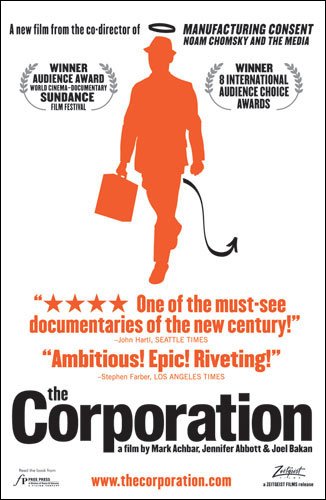
“…Through vignettes and interviews, The Corporation examines and criticizes corporate business practices…The Corporation attempts to compare the way corporations are systematically compelled to behave with what it claims are the DSM-IV’s symptoms of psychopathy, e.g., the callous disregard for the feelings of other people, the incapacity to maintain human relationships, the reckless disregard for the safety of others, the deceitfulness (continual lying to deceive for profit), the incapacity to experience guilt, and the failure to conform to social norms and respect the law…”
Many corporations pollute communities, abuse employees, exercise monopoly power over other competitors, control elections and politicians, and much more, all in the name of profit. When called to task for such bad behavior, those corporations often simply face fines that they consider just a “cost of doing business” and their behavior is not modified, to the detriment of communities, the environment, society and all our institutions. Our current oversight institutions are nearly powerless to do anything about them.
So, the question is, can communities do something on their own to address the problems caused by bad actor corporations? The answer is yes, and it can be found in one particular power that every government already has, all the way from the federal government down to the smallest burg – the power of eminent domain. And that power grants even the smallest government entity more power than the largest corporation on the planet.
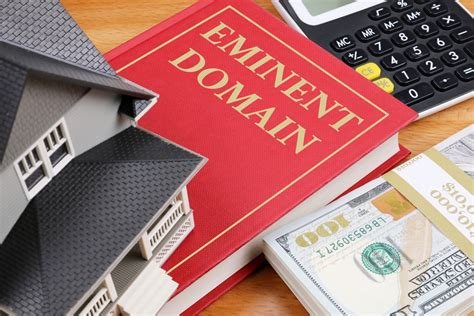 Eminent domain grants the right to the state to take private property (private property means any kind of tangible or even intangible property, which can include ownership in corporations) if it is deemed to be in the interests of the general public. To quote Star Trek’s Mr. Spock, “The needs of the many outweigh the needs of the few.” That is eminent domain in a nutshell.
Most people think of eminent domain as something to produce a benefit to society such as roads, parks, sewage treatment facilities, libraries and other beneficial things. However, eminent domain can also be used for “harm prevention” to society, as evidenced by property seized in just about every community nationwide to put up a fire station or a police station. Both of those entities exist primarily to prevent harm being done to society. And if the benefit or harm prevention can be proven in court, even the most powerful entity on the planet cannot block the taking of their property. They can only argue thereafter if they are being fairly compensated for the taking of their property.
Eminent domain is found in the U.S. Constitution, in the final section in the 5th Amendment, which states – “nor be deprived of life, liberty, or property, without due process of law; nor shall private property be taken for public use, without just compensation,” commonly called the “takings clause.” The U.S. Supreme Court has expanded the term “public use” to mean just about any kind of public benefit and affirmed that nearly all governments, from the federal level to the smallest jurisdiction, have the right to use eminent domain. And according to Cornell University law professor Robert C. Hockett, eminent domain has been frequently used to seize intangible property such as stocks, bonds, or securities. He points out that the U.S. Supreme Court has even defined the seizing of a “business as a going concern” as a valid use of eminent domain.
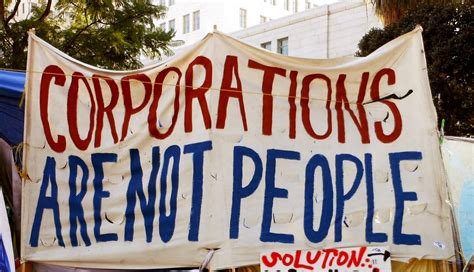 This means that cities, townships and even school districts can go after bad actor corporations in their territory and take that company from its current owners. The key to eminent domain is proving that harm is being done to society by a corporation. Given the pervasiveness of corporate harm to society, it should not be difficult to demonstrate the success of this concept. The right of eminent domain can be assigned to a non-governmental entity, including for profit and nonprofit entities and even individuals.
The DSA could assemble a team of eminent domain attorneys and seek that assignment from jurisdictions. A good place to start would be with New York City assigning that right to DSA to go after all the slumlords in NYC, as described above. Those housing entities are businesses that can be demonstrated to doing harm to the tenants, the neighborhood and the city itself and therefore justify seizure.
Interested parties can learn much more from Michael Sauvante, an expert in eminent and the author of the above book as well as this one titled Eminent Domain: How to use eminent domain to stop foreclosures, rescue homeowners, and save communities.
Other Problems
There are numerous other environmental, social and economic problems that this alternative financial ecosystem can address, helping DSA and the citizens of NYC to pursue successful, prosperous and happy lives, many of which are explored in the above Money book. All of this is achievable. All it takes is for the Mayor and the City Council to decide that they want to embrace this alternative financial ecosystem and team with DSA and SC Foundation to implement this program.